

Олександр Сич
7 August 2026
Ukraine receives data on its residents’ foreign accounts under the CRS standard, and since 3 August 2026 the tax service has also had automated access to the border service’s records of border crossings. Undeclared foreign income of a resident is taxed at 18% income tax plus the 5% military levy, with a fine and interest on top. The deadline to sue over an assessment notice is six months, or one month after an administrative appeal.
“How did the tax office find out about my account in Poland?” — that question opens almost every other consultation with an individual. Since the autumn of 2024 Ukraine has received data on its residents’ foreign accounts automatically, under the CRS standard. In July 2026 the exchange moved to the updated CRS 2.0 rules, and in August the tax service gained direct access to the border crossing database.
Below: how the tax service learns about foreign income, what to do once an assessment notice arrives, and when such assessments are set aside. If a dispute has already begun, see also the page of our tax disputes lawyer.
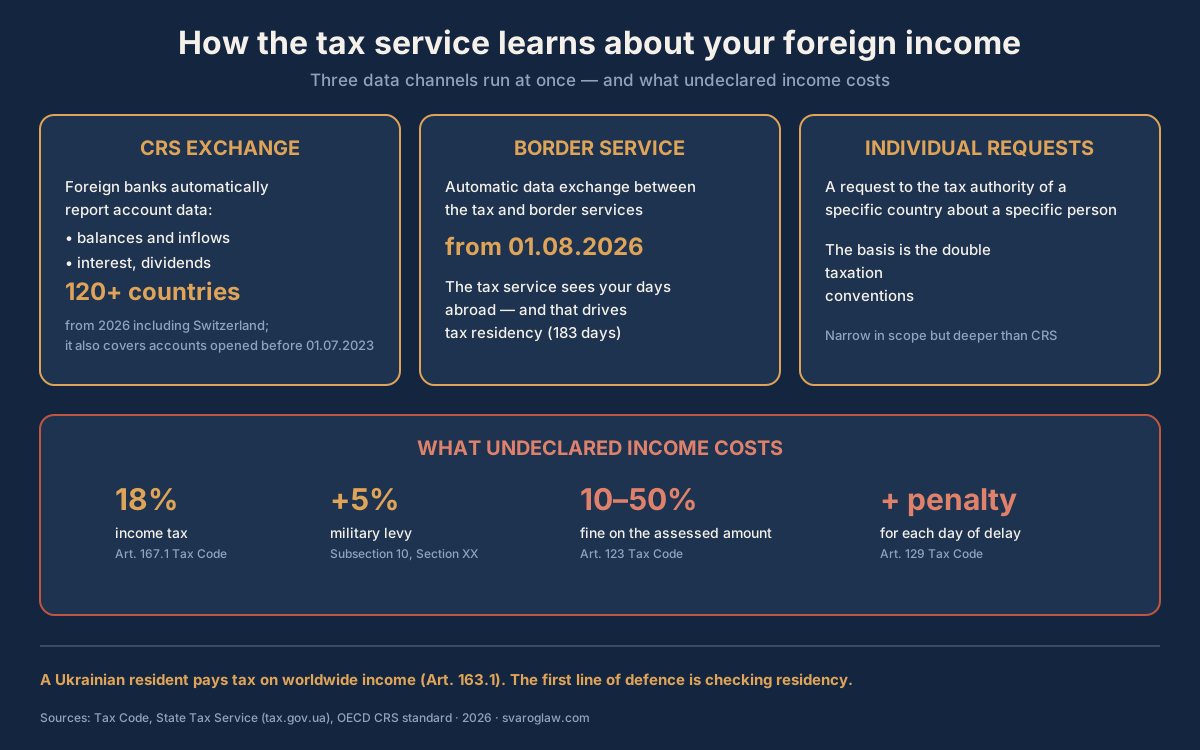
How the tax service learns about your foreign income
It has four sources, and three of them work without any request on its part.
- The CRS exchange. Foreign banks and financial institutions report annually to their own tax authorities on non-residents’ accounts — balances, credits, interest, dividends — and that data flows automatically to Ukraine. The list of reporting jurisdictions published by the tax service under Ministry of Finance Order No. 282 now runs to 121 countries and territories, every EU state included; actual reciprocal exchange covers a smaller part of the list for now and widens each year. Switzerland joined the exchange with Ukraine in 2026.
- CRS 2.0 from 1 July 2026. Ministry of Finance Order No. 316 of 15 June 2026 introduced the updated standard: electronic money, central bank digital currencies and accounts linked to virtual assets became reportable for the first time.
- Exchange with the border service. On 3 August 2026 the tax service and the State Border Guard Service signed an agreement and protocol on automated electronic data exchange. Previously the tax office asked for border crossing data by letter; now it receives it directly and uses it, among other things, to check the 183-day residence test.
- Requests to a particular country. Besides the automatic exchange, the tax service sends individual requests about a specific taxpayer under the double taxation conventions.
A Ukrainian resident pays tax on worldwide income: under sub-paragraph 162.1.1 and paragraph 163.1 of the Tax Code, income from sources outside Ukraine is taxable too. A salary in Germany, rent from a flat in Spain, interest on a deposit in Poland — all of it is taxable in Ukraine for a Ukrainian tax resident, and paragraph 170.11.1 requires such a recipient to file an annual return and pay 18%.
What undeclared foreign income costs
| Charge | Rate or amount | Basis |
|---|---|---|
| Income tax | 18% of the income | paras. 167.1, 170.11 |
| Military levy | 5% | para. 16-1 of Subchapter 10 of Chapter XX |
| Fine for understating the liability | 10%, or 25% where the conduct was deliberate | sub-paras. 123.1, 123.2 |
| Fine for failing to file a return | 340 UAH, or 1,020 UAH for a repeat within a year | para. 120.1 |
| Fine for paying an agreed liability late | 5% for a delay of up to 30 days, 10% beyond | para. 124.1 |
| Interest | for each day of delay | Art. 129 |
Together the core assessment reaches 23% of the income, and that is before fines and interest. It only stays at the top of that range when the taxpayer does nothing.
Step 1. Check whether you are a Ukrainian tax resident at all
An assessment only makes sense against a resident. The criteria in sub-paragraph 14.1.213 apply in sequence, not at the tax office’s choosing: first place of residence, then permanent home, then centre of vital interests (closer personal or economic ties), then presence in Ukraine for at least 183 days in the year, and only last citizenship. The Code separately provides that the permanent residence of family members, or registration as an entrepreneur, is a sufficient condition for locating the centre of vital interests.
If you have lived abroad for several years, work and pay tax there and have moved your family there, there are arguments for non-residence. But the defence rests on evidence: a certificate of tax residence in the other country, an employment contract, a tenancy agreement.
Step 2. Check the credit for tax paid abroad
If you are a Ukrainian resident but have already paid tax on that income abroad, it reduces the Ukrainian liability under paragraphs 13.4 and 170.11.2. You need a certificate from the state authority of the source country stating the tax paid, the base and the object; it is legalised or bears an apostille unless an international treaty provides otherwise (paragraph 13.5). Pay 12% in Poland and in Ukraine you top up the difference to 18%, not a further 18%. The credit cannot exceed the tax calculated under Ukrainian rules (paragraph 170.11.4), and taxes on property, on capital and indirect taxes are not creditable at all (paragraph 170.11.3). The military levy is generally outside the conventions, so the 5% has to be paid in full.
A separate provision helps those who cannot gather the documents in time: under paragraph 170.11.2 a taxpayer without supporting documents applies to the tax office to postpone filing until 31 December of the following year. And where the tax service has assessed the full amount without crediting the tax paid abroad, that is a ground of challenge in itself.
Step 3. Choose your strategy once the notice arrives
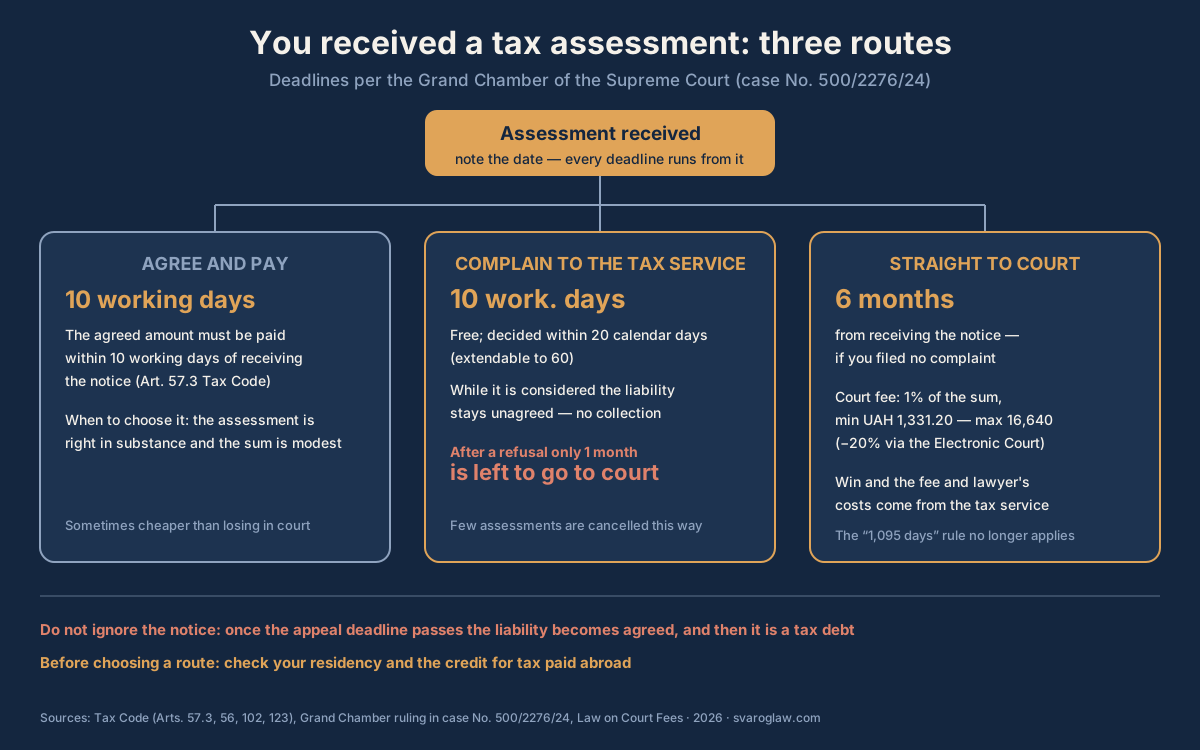
Every deadline runs from the day you received the assessment notice.
- Accept it and pay within 10 working days. That is the period in paragraph 57.3, and it is shorter than people assume. Paying within it does not cancel the fine already in the notice, but it prevents a tax debt arising, along with the fine under paragraph 124.1 and interest under Article 129.
- An administrative appeal to the tax service. The complaint is filed within 10 working days of receiving the notice (paragraph 56.3), free of charge. The decision is sent within 20 calendar days and the review may be extended, but to no more than 60 days (paragraphs 56.8, 56.9). If no reasoned decision is sent in time, the complaint is deemed allowed in the taxpayer’s favour, and the liability stays unagreed while it is pending.
- Straight to court. Without a prior complaint the deadline is six months (Article 122(2) of the Code of Administrative Procedure); after an administrative appeal it is only one month from the end of that procedure (paragraph 56.19). That is how the Grand Chamber of the Supreme Court drew the line in its judgment of 16 July 2025 in case No. 500/2276/24; the “1,095 days” of older articles cannot be relied on.
The court fee on an individual’s monetary administrative claim is 1% of its value, but not less than 0.4 and not more than 5 subsistence minimums for working-age people, that is from 1,331.20 to 16,640 UAH in 2026. Filing through the Electronic Court reduces it by 20%.
What to do in the first ten working days
- Record the date you received the notice: the postmarked envelope, the delivery receipt or the entry in your online account. Both the 10 working days and the six months run from it.
- Get the inspection report with its annexes and see where the figure came from: actual income or the turnover on the account.
- Gather the evidence of residence or non-residence under sub-paragraph 14.1.213: certificates, contracts, documents about family and housing.
- Order the foreign tax authority’s certificate under paragraph 13.5 and, if it will not arrive in time, apply to postpone the filing deadline.
- Choose your route: pay, complain to the tax service, or sue. After the tenth working day the administrative appeal is no longer available.
What the court examines: the usual weak points in the tax service’s case
- residence determined formally, on citizenship alone, without applying the criteria in sub-paragraph 14.1.213 in sequence;
- income calculated from the turnover on the account: proceeds from selling your own belongings, repaid loans and transfers from family are not income;
- tax paid abroad not credited although the certificate was filed;
- breaches of the inspection procedure or of the service of the notice;
- foreign currency converted at the wrong date’s rate.
Taxpayers’ typical mistakes
- Ignoring the notice: after 10 working days without a challenge the liability becomes agreed, and collection begins with a right of tax lien.
- Filing a complaint with the tax service “just in case”: once it is refused, only one month remains to sue instead of six.
- Producing a foreign authority’s certificate without legalisation or an apostille where no treaty dispenses with it: it will not be accepted.
- Assuming the tax office will identify a family transfer for itself. The purpose of the payment and the family relationship have to be shown by the taxpayer.
- Staying silent about foreign income after a written enquiry: declaring it yourself costs less than an assessment with a fine under Article 123.
When you do not need a lawyer
If the assessment is small, the income really existed, you paid no tax abroad and do not dispute Ukrainian residence, it is simpler to pay within the ten days and close the matter. A lawyer is needed where the sum is substantial, where there are arguments about non-residence or crediting foreign tax, or where the tax service has treated every credit to the account as “income” without distinction.
Questions and answers
Can the tax office really see my foreign account?
Yes. Under the CRS standard foreign financial institutions report annually on Ukrainian residents’ accounts: balances, credits, interest and dividends. The tax service’s list of reporting jurisdictions runs to 121 countries and territories, and since 1 July 2026 electronic money and virtual assets have been caught too.
I have lived abroad for three years. Do I owe tax in Ukraine?
It depends on residence. If your centre of vital interests has moved abroad and you spend most of the year there, there are grounds to treat you as a non-resident of Ukraine, and a non-resident’s foreign income is not taxed here. Status is proved by documents, not by assertion.
I have already paid tax on my salary abroad. Will another 18% be charged in Ukraine?
No; where a double taxation convention applies, the tax paid abroad is credited (paragraphs 13.4, 170.11.2). You need a legalised certificate from the foreign tax authority stating the tax, the base and the object. You top up the difference to 18%, plus the 5% military levy.
How long do I have to pay after the notice arrives?
10 working days following the day you received it (paragraph 57.3), unless you have started a challenge. After that the sum becomes agreed and turns into a tax debt.
How long do I have to go to court?
Six months from receiving the notice if you did not complain to the tax service, and only one month from the end of the administrative appeal if you did. That is the Grand Chamber of the Supreme Court’s position in its judgment of 16 July 2025 in case No. 500/2276/24.
Can my accounts be frozen over undeclared income?
Once the liability is agreed and unpaid, the tax service acquires a right of tax lien and of enforced collection. A separate risk comes from the foreign bank, which may restrict the account itself.
How far back can tax be assessed?
The general period is 1,095 days from the filing or payment deadline (paragraph 102.1). But tax time limits were suspended and only started running again on 1 August 2023 (sub-paragraph 69.9 of Subchapter 10 of Chapter XX as amended by Law No. 3219-IX), so for older liabilities the period covered is in fact longer.
Are transfers from relatives abroad income?
No, financial help from family members is not taxable income. If the tax service has included such credits in the base, that is an error and can be challenged; you will need statements showing the purpose of the payment and documents on the family relationship.
What does challenging an assessment in court cost?
The court fee is 1% of the sum challenged, within a range of 1,331.20 to 16,640 UAH (2026), less 20% for filing through the Electronic Court. If you win, the fee and the legal costs are recovered from the tax service; our fee ranges are in the legal services price list.
Should I file a return myself before the tax office comes?
Usually yes: declaring by 1 May and paying by 1 August closes the matter without a fine for understatement. Before filing, work out your residence and the credit for foreign taxes so that you do not pay more than you owe.
Sources
- Tax Code of Ukraine: sub-paras. 14.1.213, 162.1.1, paras. 163.1, 167.1, 170.11, Arts. 13, 56, 57, 102, 120, 123, 124, 129, sub-para. 69.9 of Subchapter 10 of Chapter XX — zakon.rada.gov.ua/laws/show/2755-17
- Code of Administrative Procedure of Ukraine, Art. 122(2) — zakon.rada.gov.ua/laws/show/2747-15
- Law of Ukraine “On Court Fees” No. 3674-VI — zakon.rada.gov.ua/laws/show/3674-17
- Judgment of the Grand Chamber of the Supreme Court of 16 July 2025 in case No. 500/2276/24 (deadlines for challenging assessment notices) — reyestr.court.gov.ua
- State Tax Service of Ukraine, “International automatic exchange of information (CRS)” and the list of reporting jurisdictions — tax.gov.ua
- Ministry of Finance of Ukraine, Order No. 316 of 15 June 2026 on applying CRS 2.0 — mof.gov.ua
Defending against assessments with Svarog
Send us the assessment notice and describe where the income came from — we will calculate the real liability once residence and foreign tax credits are taken into account, and tell you plainly where it is better to pay within the deadline and where the assessment can be set aside. Related services: challenging tax assessment notices, pre-action settlement of tax disputes, administrative cases.
+38 095 554-54-24 · Kyiv, 7 Khoriva Street (Podil) · Mon–Fri 9.00–18.00