A preventive measure can be lifted or varied at any stage of the proceedings, and the starting point is one: detention is an exceptional measure (Art. 183 of the Criminal Procedure Code). The court imposes it only where the prosecutor has proved that neither bail, nor house arrest, nor a personal undertaking will stop the suspect absconding or influencing witnesses.
In practice the prosecutor often simply lists the risks: “may abscond”, “may influence witnesses”. The law requires each risk to be supported by specific circumstances (Arts. 177, 194), and most successful applications are built on taking those circumstances apart.
The second pillar of an application is a change of circumstances. A detention order runs for a limited time and rests on the situation as it was when it was made. New evidence has appeared, health has deteriorated, sureties have been found, the bail money has been raised, time has passed, the investigative steps are done. Each of these is a reason to go back to court.
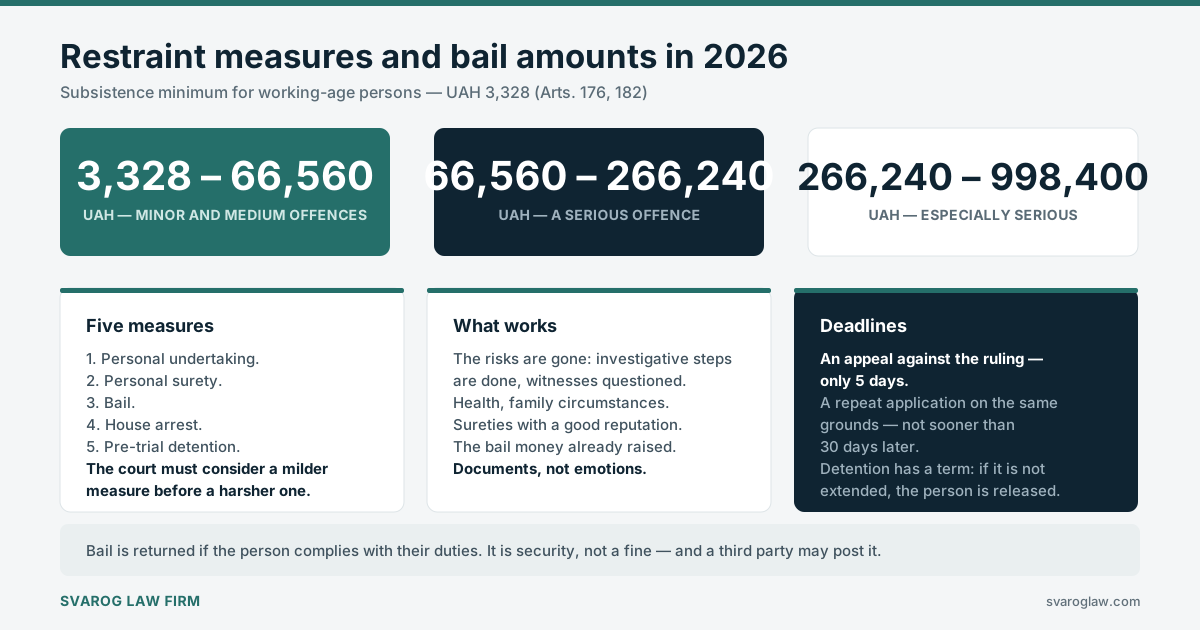
The five preventive measures
From the mildest to the most severe (Art. 176):
- a personal undertaking: a written promise to comply with the duties the court imposes;
- a personal surety: one or more people of unblemished reputation vouch for the person;
- bail: money paid into the court’s deposit account;
- house arrest: round the clock or for set hours, often with an electronic tag;
- detention: the most severe, exceptional measure.
The court must consider whether a milder measure would suffice before imposing a stricter one (Art. 194).
Bail amounts
Bail is tied to the subsistence minimum for working-age people, which in 2026 is 3,328 UAH (Art. 182):
| Gravity of the offence | Bail range | Amount in 2026 |
|---|---|---|
| A criminal misdemeanour or a less serious offence | 1–20 subsistence minimums | 3,328–66,560 UAH |
| A serious offence | 20–80 subsistence minimums | 66,560–266,240 UAH |
| A particularly serious offence | 80–300 subsistence minimums | 266,240–998,400 UAH |
In exceptional cases the court may set a higher figure if it considers a smaller sum would not secure compliance.
Bail is returned if the person complied with their duties: attended when summoned, did not contact witnesses, did not travel without permission. The court treats it as a guarantee of attendance, not a punishment, so the money is worth raising even when the sum looks large. Bail can be paid by a third party: a relative, a friend, an employer.
Grounds for varying a preventive measure
The risks are unproved or have gone
The investigative steps are done, the witnesses interviewed, the evidence seized: there is nothing left to influence, and this argument only strengthens with each month of the investigation.
Health
A serious illness needing treatment incompatible with detention conditions. Discharge summaries, a doctor’s report and, where needed, an expert report are required.
Family circumstances
Young children, a child with a disability, seriously ill dependent parents, being the sole breadwinner.
Sureties have come forward
People of unblemished reputation willing to give undertakings under Art. 180.
The bail money has been raised
With evidence of where it came from.
The charge has been reclassified
The offence is now a less serious one, which lowers the bail range as well.
Time limits breached
Detention: the court did not extend it in time. In that case the investigating judge must release the person (Art. 206).
The deadlines to know
The defence may apply to vary a preventive measure at any time (Art. 201). A repeat application on the same grounds made less than 30 days after the previous ruling may be left unconsidered unless it sets out new circumstances. So each application is built around specific new facts rather than rewriting the last one.
An appeal against a preventive measure ruling has two deadlines (Art. 395): 5 days from announcement where the investigating judge made it during the pre-trial investigation, and 7 days where the trial court made it. For someone in custody time runs from service of the copy.
Detention is time-limited. During the investigation an order runs for up to 60 days, and the total cannot exceed 6 months for less serious offences and 12 months for serious and particularly serious ones (Art. 197). At trial the question of continued detention is reviewed at least every 60 days (Art. 331), and each such hearing is a separate chance to obtain a milder measure.
What works in an application
The evidence that persuades a court
- documents rather than words: references from work and from the neighbourhood, a household composition certificate, medical records, housing documents (a settled address is a weighty answer to the risk of absconding);
- proof that the risks have gone: witness interview records, expert reports, confirmation that the investigative steps are complete;
- named sureties with references and written consent;
- readiness to pay bail with proof the money exists (an account statement, an income certificate for whoever is paying);
- a rebuttal of the prosecutor’s case on each risk separately, by reference to specific circumstances.
The typical mistake in self-drafted applications is an emotional narrative instead of engaging with the risks the court accepted.
Can the application be made without a lawyer
The law allows it: a suspect may apply under Art. 201 themselves. The difficulty lies elsewhere: an application with no new circumstances is left unconsidered, and someone in custody cannot gather references and certificates, arrange sureties or check the detention deadline. Lifting or varying a preventive measure happens in an adversarial hearing with the prosecutor, and without prepared documents the chances are slim.
A case from our practice
In March 2025 the wife of a man held in pre-trial detention for a second month on suspicion of a serious property offence came to us. The only risk the judge had accepted was that he “may influence witnesses”, but by then all three witnesses had been interviewed and the expert report completed. We gathered the interview records, a household composition certificate (two young children), a reference from his employer, the documents for the flat in Kyiv, and found someone with verified income willing to pay bail. Two weeks after filing, the judge replaced detention with bail of 25 subsistence minimums (about 75,000 UAH at 2025 rates), with the duty to surrender his passport and wear a tag. The bail was paid the same day, and our fee was about 20,000 UAH (details changed).
How we work
- We analyse the ruling: which risks the court accepted and what they rest on.
- We gather the documents: references, medical certificates, papers on family, housing and work.
- We find sureties and prepare the bail documents.
- We draft the application dealing with each risk separately.
- We appear in court and on appeal where needed.
- We track the detention deadlines and secure release where they have been breached.
Cost of services
No court fee is payable for an application to vary a preventive measure or for an appeal against the ruling in criminal proceedings. The real outlay in 2026 is the bail (paid into the court’s deposit and returned once the duties are complied with) and the lawyer’s fee.
Questions and answers (Varying a preventive measure)
Can the hearing go ahead without the suspect being brought from detention?
Yes. The court may hold it by video link: the suspect takes part from the detention centre while the lawyer is in the courtroom (Art. 336). That is often quicker than waiting for an escort, and it does not affect how the documents are assessed.
What if the appeal deadline has been missed?
File the appeal together with an application to restore the deadline, evidencing the good reason — for example late service of the copy of the ruling (Art. 117). In parallel a fresh application to vary the measure can be made under Art. 201: it has no deadline and does not depend on the appeal.
Can property be offered instead of money, or bail paid in instalments?
No. Bail is paid only in money, into the court’s deposit account, in full. Someone not in custody must pay within five days of the ruling; someone in custody is released once the money reaches the deposit, so it is worth having the court’s bank details ready.
What happens to the bail if the duties are breached?
On the prosecutor’s application the court may forfeit the bail to the state and at the same time impose a stricter measure, up to detention. So after release we go through each imposed duty and how long it lasts with the client separately.
Contact a Svarog lawyer about varying a preventive measure
Send us the court’s ruling and the notice of suspicion. We will identify which risks the court accepted, check the detention deadline and the date of the next review, calculate the bail range for your category of case, and tell you which documents to gather before the hearing. Lifting or varying a preventive measure takes several weeks of preparation, so the documents are worth starting on at once.