Small-scale privatisation through Prozorro is the sale of state and municipal property worth up to 250 million UAH: non-residential premises, buildings, going-concern property complexes, unfinished construction, and individual assets. The procedure is governed by Law of Ukraine No. 2269-VIII “On Privatisation of State and Municipal Property”, and its main rule is simple: such assets are sold exclusively through electronic auctions on the Prozorro.Sale system. There are no arrangements outside the system: every asset for sale is published in the electronic trading system, and anyone who meets the statutory requirements may take part.
An open procedure is not the same as a simple one. Bidders lose money and time by failing to check the asset and buying premises with encumbrances or debts, missing the deadlines for filing documents, overlooking the conditions of sale (for example an obligation to keep the same line of business), or, having won, failing to sign the contract within the 30 days allowed and forfeiting the deposit. A separate risk area is the restrictions on bidders: the law bars from the auction persons connected with the aggressor state, sanctioned persons, and structures with opaque offshore ownership.
We support participation in small-scale privatisation auctions from checking the asset to registering title: we verify the lot’s legal position and the conditions of sale, prepare the documents, guide the client through registration and bidding, execute the sale contract and, where necessary, challenge breaches of procedure.
The legal basis and the types of auction
Small-scale privatisation rests on Law No. 2269-VIII, with the details set by Cabinet Resolutions No. 432 of 10 May 2018 (the procedure for electronic auctions selling small-privatisation assets) and No. 433 of 10 May 2018 (selection of electronic platform operators and the system administrator). The starting price is derived from the asset’s book or appraised value, and the sale itself runs through three successive formats:
Auction with an increasing starting price
English style: bidders raise the price in turn from the starting level.
Auction with a reduced starting price
Held if the first auction fails: the starting price is halved, and bidding then rises again.
Auction by stepped reduction
Dutch style, followed by sealed bids: the price falls in steps until someone stops the bidding, after which the bidders compete against each other.
The sellers are the state privatisation authorities and local councils; the buyers are individuals and companies registered in Ukraine or abroad, except those the law expressly bars. Before bidding on a lot it is worth running legal due diligence on the asset so as not to buy property with hidden encumbrances.
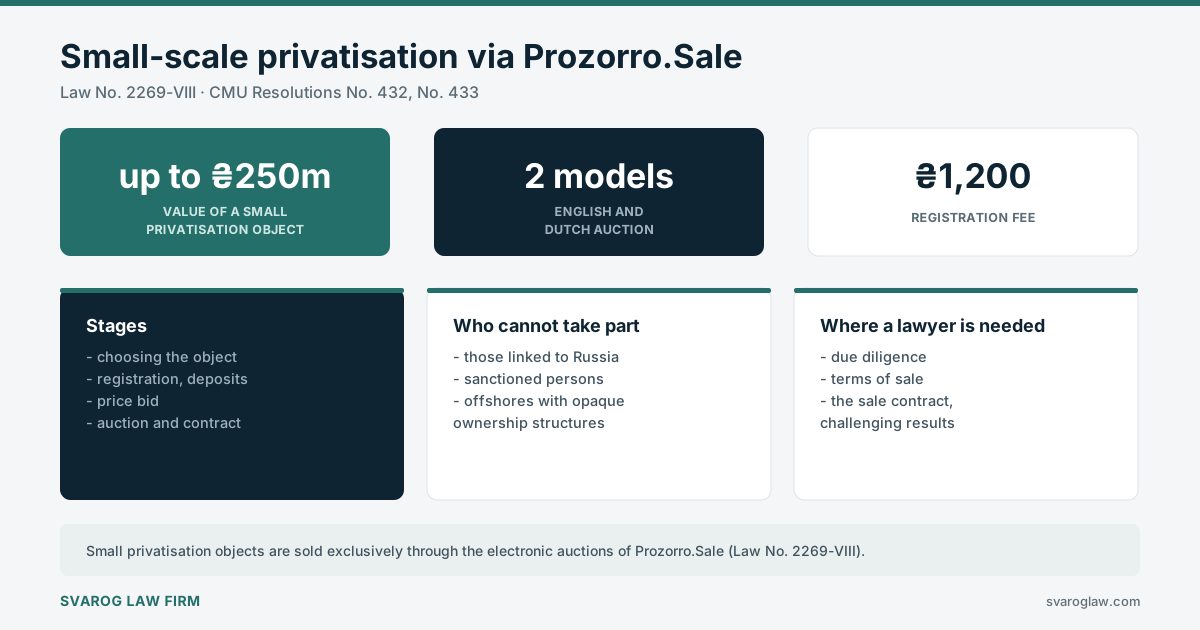
Stages of taking part in a small-privatisation auction
- Choosing the asset in the system and studying the conditions of sale: line of business, encumbrances, deadlines.
- Registration on an accredited electronic platform of the Prozorro.Sale system.
- Payment of the registration fee and the deposit.
- Submitting a bid and taking part in the auction.
- If you win — signing the protocol of the auction results.
- Signing the sale contract with the privatisation authority and paying the price.
- Registering the transfer of title.
The registration fee is 0.2 of the minimum wage as at 1 January of the auction year: in 2026 that is 1,729.40 UAH. The deposit is 10 % of the lot’s starting price; the exact figure is always stated in the notice, and for an auction with a reduced starting price it is calculated on the reduced figure. The winner’s deposit counts towards the price; an unsuccessful bidder’s deposit is returned. A winner who does not sign or pay forfeits the deposit entirely.
What to check in a lot before bidding
Checking one asset takes a few working days and is built on public registers:
- the State Register of Property Rights to immovable property: who owns it, whether there is a mortgage, attachment or ban on disposal.
- the State Register of Encumbrances over Movable Property, if the lot includes equipment.
- the companies register, where a going-concern complex or corporate rights are being sold: the director, debts, dissolution procedures.
- the Unified Register of Debtors and enforcement proceedings against the asset holder.
- the Unified State Register of Court Decisions: whether litigation over this very asset is under way.
- planning and technical documents: designated use, unauthorised extensions, the state of the utilities.
- the conditions of sale in the notice: obligations to keep the line of business, pay off the enterprise’s debts, retain jobs.
We also advise inspecting the asset in person: the organiser provides access on the days set out in the notice, and that is usually where you see what the documents do not show.
How we support small-scale privatisation
- We check the asset: the seller’s title, encumbrances, debts, register data, conditions of sale.
- We assess the risk in the conditions of sale — the line of business, the winner’s obligations.
- We prepare the bidding documents and keep the deadlines.
- We handle registration on the platform and the calculation of the fees.
- We execute the sale contract with the privatisation authority and oversee payment and handover.
- Where the procedure has been breached we challenge the auction results.
What a bidder who skips the checks risks
- Buying an asset with encumbrances, debts or a contested history that surface after the contract is signed.
- Missing obligations in the conditions of sale whose breach allows the contract to be rescinded and the asset returned to the state.
- Missing a filing or payment deadline and forfeiting the deposit.
- Being disqualified after the bidding because of the restrictions on participants.
- Failing to challenge in time a breach of procedure that cost you the auction.
Every one of these risks is removed by checking before you bid, while what is at stake is still the price of an opinion rather than the price of the lot.
A case from our practice
In 2025 an entrepreneur came to us who had won non-residential premises outside Kyiv at auction and only after signing the protocol read the conditions of sale carefully: among them was an obligation to keep the asset’s line of business for five years, whereas he planned to open a warehouse there. We reviewed the wording of the conditions and the privatisation authority’s documents, filed a request to clarify the scope of the obligation, and agreed with the buyer a use that fell within it. The contract was signed within the thirty-day period, the deposit was preserved, and the risk of rescission a few years later was removed before any payment was made. The work took about three weeks. (details changed)
Cost of services (small-scale privatisation)
Separate from our fee are the payments the procedure itself requires: the registration fee of 1,729.40 UAH, the deposit (refunded or credited against the price), notarisation of a contract for real estate, the price of the asset and registration of title. If the matter goes to court, the fee in 2026 for a non-monetary claim to have the auction results declared invalid is 1,331.20 UAH for an individual and 3,328 UAH for a company; a monetary claim is charged as a percentage of its value. Filing through the Electronic Court reduces the fee by 20 %.
Full price list · Real estate lawyer · Drawing up a sale contract · Land matters
Questions and answers (small-scale privatisation)
Can a sole trader buy an asset, and can a loan be used?
A sole trader takes part as an individual, and the property is registered to them. The law does not prohibit borrowed funds, but the auction will not wait for them: the lot must be paid for by the contractual deadline, so the bank’s decision has to be in place before the bidding. The source of funds is checked under anti-money-laundering rules, so the supporting documents are worth assembling in advance.
How long does the whole procedure take?
From the notice to registration of title usually takes 1.5–3 months. The law allows bidders time to prepare between the notice and the auction, the contract is signed within 30 days of the protocol, and payment and registration of title follow.
What happens if the winner does not sign the contract in time?
The deposit is not returned, the auction results are annulled, and the asset is put up for sale again. That mistake costs more than any check, so we put the deadline in the calendar the moment the protocol is signed.
Are the fees returned if the auction is cancelled or you lose?
The deposit of an unsuccessful bidder is returned to the account it came from, and likewise if the organiser cancels the auction. The registration fee is the charge for taking part and is not refunded.
Can the asset be inspected before the auction?
Yes. The notice of sale states the arrangements and the inspection days, and the organiser must provide access. Skipping the inspection is unwise: the state of the roof, the utilities and the actual layout of the premises are not visible in the documents, and the price cannot be reduced after you have won.
What if the procedure was breached and you lost?
Record the breaches in the system and challenge them: first with the organiser and the platform administrator, then in court seeking to have the auction results declared invalid. The deadlines here are short, and the case is built on documents from the electronic trading system, which should be saved immediately.
Contact a Svarog lawyer about small-scale privatisation
Small-scale privatisation through Prozorro is open to everyone who meets the statutory requirements, but the winner is the one who worked out the conditions in advance. At the consultation we will assess the asset you are interested in, set out the risks and the conditions of sale, and support your bid from checking the lot to registering title. If a dispute arises over the property or the contract, we bring in our commercial disputes practice.