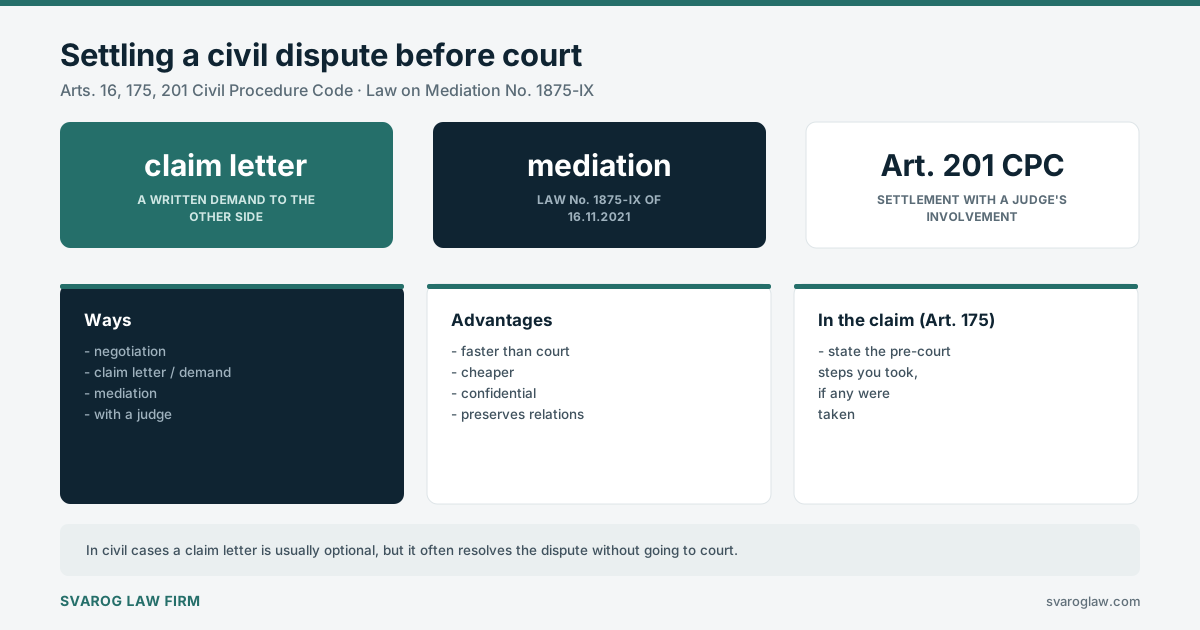
Pre-court settlement of civil disputes covers everything that can be done before a claim or instead of one: negotiations, a written demand, mediation, and — once proceedings have started — settlement with the judge’s involvement. Article 16 of the Civil Procedure Code provides that the parties take steps to settle a dispute out of court by agreement between themselves, or where such steps are mandatory by law. Article 175 also requires the statement of claim to say what pre-court steps were taken. So the court sees your attempt to settle in the very first document on the file.
For most civil disputes the demand procedure is a right, not a duty; only a specific law or the contract itself makes it mandatory. Still, it is not to be skipped: a demand with the sum calculated, the legal basis cited and a deadline for compliance shows your opponent that the next document will be a claim, and fixes your position before the case starts. Since 2021 the Law No. 1875-IX “On Mediation” has also given negotiations with a neutral third party a legal status of their own.
We assess whether your dispute can realistically be settled out of court, choose the instrument (demand, negotiation, mediation) and run it so that your right to go to court survives if no agreement is reached.
Ways of settling civil disputes out of court
Different instruments suit different kinds of conflict:
Negotiations
The fastest route; the lawyer conducts them on your behalf, and every agreement goes straight onto paper.
A written demand
A formal document setting out the claims, the grounds, the calculation and a deadline; in debt cases the demand alone is often enough.
Mediation
Structured negotiations with an independent mediator under Law No. 1875-IX; suitable where the parties want to preserve the relationship.
Settlement with the judge’s involvement
Under Arts. 201–205 of the Civil Procedure Code: a conciliation procedure after proceedings have opened, held in joint and closed sessions.
When settling out of court pays best
A demand and negotiations work best in disputes about repayment of a debt, recovery under a contract, compensation for harm, and in conflicts between co-owners, neighbours and heirs. Here the opponent is often ready to settle but is waiting for the first formal step. Mediation suits cases where the parties still have to live or work together: family, inheritance and neighbour disputes.
Where the other side is deliberately evading you, has disappeared or is already moving property around, every week of negotiation works against you, and it is wiser to file the claim at once with an application for interim relief.
If the dispute is a commercial one (between businesses), different rules apply; we set them out on the page about pre-court settlement of commercial disputes.
What carries over from the pre-court stage into the case
Everything you write and sign now becomes material in the case. Facts a party has admitted need not be proved (Art. 82 of the Civil Procedure Code): the line “I admit part of the debt but have no money at present” in a reply to a demand relieves you of proving the debt itself. That same reply admitting the debt interrupts limitation (Art. 264 of the Civil Code), and the three-year period starts again.
Negotiations themselves, though, do not suspend limitation: the list of grounds in Art. 263 of the Civil Code is exhaustive, and correspondence is not on it. This matters now in particular: limitation, suspended for the quarantine from 2 April 2020, has been running again since 4 September 2025, so old debts must either be interrupted by an admission or taken to court.
One more point that is rarely allowed for without a lawyer: if the dispute arose from a party’s own wrongful conduct or from abuse of rights, the court may award the costs against that party whatever the outcome (Art. 141). So we draft the demand with the possible trial already in mind: with the calculation under Art. 625 of the Civil Code (3 % per annum plus inflation losses for late payment of a money debt), a list of evidence and a clear deadline.
How we work
- we analyse the substance of the dispute, the documents and the evidence, and assess the prospects in court;
- we choose the instrument: negotiation, a demand, mediation or settlement with the judge;
- we draft the demand or the proposal so that it works both as pressure and as evidence;
- we negotiate on your behalf and record what is agreed in writing (a settlement agreement, a contract, a repayment schedule);
- if no agreement is reached, we move to court representation without losing time;
- we follow up on whether what was agreed is actually performed.
Common mistakes made before people come to us
Most often people arrive having already sent their own free-form “demand”: no figure, no deadline, no reference to the contract or the IOU. Such a letter creates no legal consequences, but it does warn the debtor, who then has a few weeks to sign the car or the flat over to relatives. The second common situation: an oral agreement to pay by instalments that nobody documented, and after two payments the debtor no longer “remembers” the rest. The third: messenger correspondence in which the creditor writes that the repayment date is “not important”, and the other side later prints those messages out. And the fourth: months of negotiation with someone who never intended to pay, while limitation runs out.
A case from our practice
In 2025 a client came to us who had lent an acquaintance 180,000 UAH against an IOU repayable “by the end of the year”. The date passed, the debtor answered with promises, and when pressed wrote that “the IOU means nothing”. We prepared a demand with the debt calculated together with 3 % per annum and inflation losses under Art. 625 of the Civil Code, sent it by registered post with a list of contents and acknowledgement of receipt, and gave 10 days to reply. The debtor replied admitting the debt and offering instalments; we documented that in a written agreement with a four-month schedule and a term allowing immediate recourse to court on any missed payment. About six weeks passed from the first consultation to signing, and the client received the full sum on schedule; the work cost about 10,000 UAH instead of a court fee, months of litigation and enforcement proceedings (details changed).
Cost of services (settling a dispute out of court)
The demand and the negotiations cost nothing but postage; a claim, however, has a price. In 2026 the court fee for an individual’s monetary claim is 1 % of its value, but not less than 1,331.20 and not more than 16,640 UAH; a non-monetary claim is 1,331.20 UAH; filing through the Electronic Court multiplies the rate by 0.8. Where the debt is evidenced by a written contract, a court order is available for a fee of 332.80 UAH.
What a claim would cost instead of a demand
A demand and negotiations cost only postage. With a written contract a court order is available for 332.80 UAH.
General civil cases are handled by our civil lawyer.
Questions and answers (settling a dispute out of court)
Can a dispute be settled out of court remotely?
Yes. You send us the documents by messenger or email, we send the demand by registered post with a list of contents to the opponent’s address, and we negotiate by phone or video. Mediation under Law No. 1875-IX can also be held online if the parties and the mediator agree to that format.
What if limitation runs out during the negotiations?
Do not wait. Correspondence and negotiations do not suspend limitation (Art. 263 of the Civil Code), and since 4 September 2025 the “quarantine” suspension no longer applies. If only weeks remain of the three-year period, we file the claim in parallel with the negotiations: a settlement can be approved by the court later, whereas a missed deadline is restored only for good reasons, and negotiations are not one of them.
How should a demand be served so the court takes it into account?
By registered post with a list of contents and acknowledgement of receipt to the opponent’s registered address, and for a sole trader or company to the address in the register as well. The list of contents and the tracking number are then attached to the claim as evidence under Art. 175.
The opponent refuses to sign a settlement but promises everything orally. Is there any point in negotiating further?
An oral promise is backed by nothing, so we offer two options: a written agreement with a schedule, or a claim and a settlement approved in court. A court order approving a settlement is itself an enforcement instrument (Art. 208), so if the schedule is broken you go straight to the enforcement officer without a new case.
Can the lawyer’s fees for the pre-court stage be recovered?
Legal costs under Art. 133 cover legal assistance connected with the hearing of the case, and the practice on the cost of a demand letter is mixed. So we either build that cost into the demand itself as damages where the contract allows, or write it into the terms of the settlement.
What does mediation cost and who pays the mediator?
The mediator’s fee is set by the mediation agreement, and the parties usually split it equally unless they agree otherwise. There is no state fee for mediation. Settlement with the judge after proceedings have opened costs nothing extra, though the court fee for the claim has already been paid by then; if the parties settle, the court refunds the claimant 50 % of the fee.
Contact a Svarog lawyer about settling a dispute out of court
Describe the conflict and send us the documents: the IOU, the contract, the correspondence. We will assess whether the dispute can realistically be settled without court, and if so, take the negotiations on. If no agreement is reached you lose nothing: the demand, the calculation and the opponent’s recorded replies will already be working for the claim.